
LOGAN BROWN: A PLACE AT THE FIRE
Photography Supplied.
Steve Logan, co-founder and owner of Wellington's Logan Brown, never wanted the restaurant to feel intimidating.
It would be easy, from the outside, to assume otherwise. The restaurant opened in 1996 on Cuba Street and quickly made its presence known. Within 12 months, Logan Brown was named Restaurant of the Year in Michael Guy’s Eating Out, an early success that brought equal parts celebration and pressure.
Now one of the capital’s defining dining rooms, MICHELIN recognition could add another layer of grandeur. However, for Steve, the accolade points to something simpler — people, and the consistently warm, unshowy hospitality that has defined Logan Brown from the beginning.
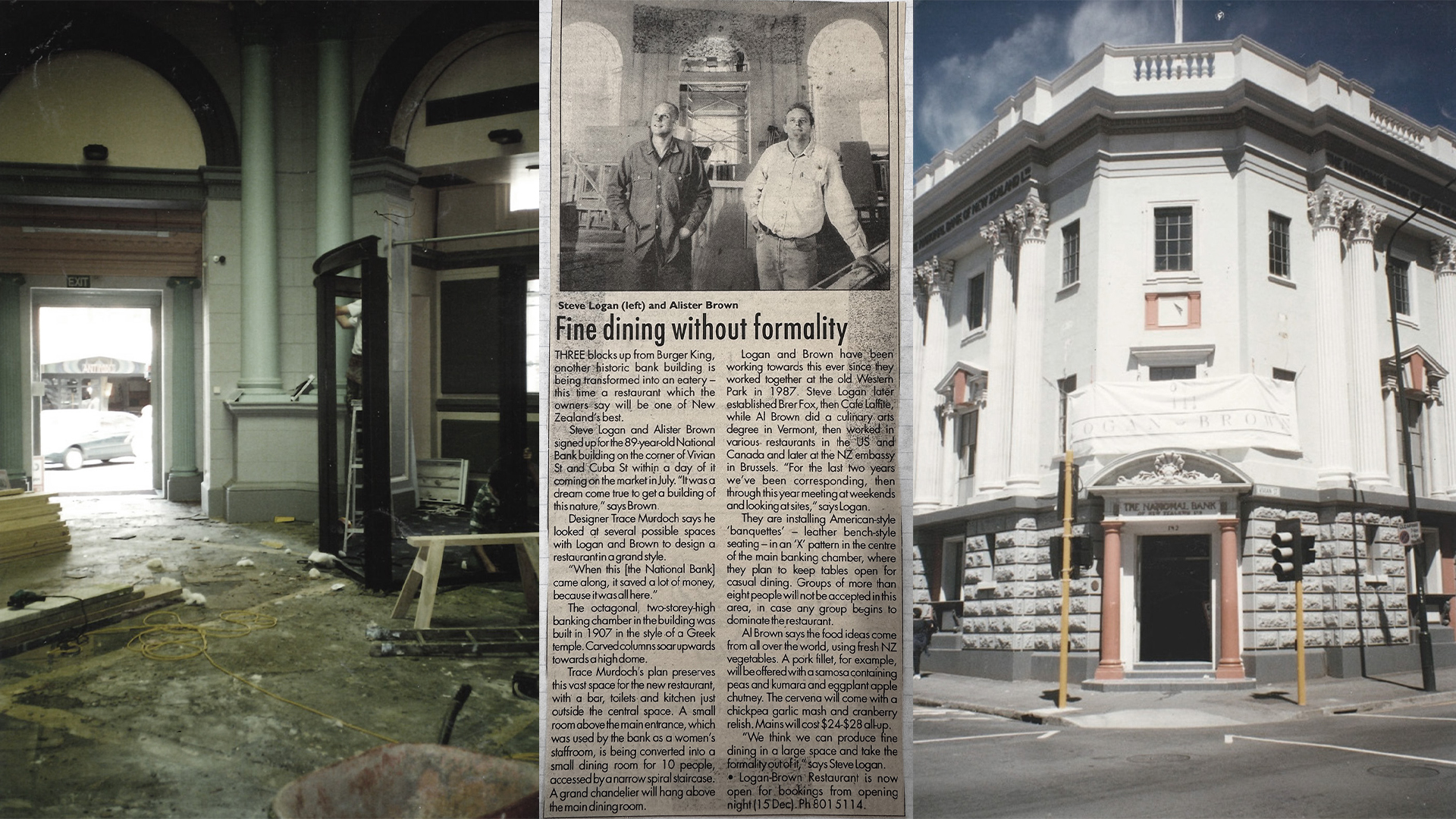
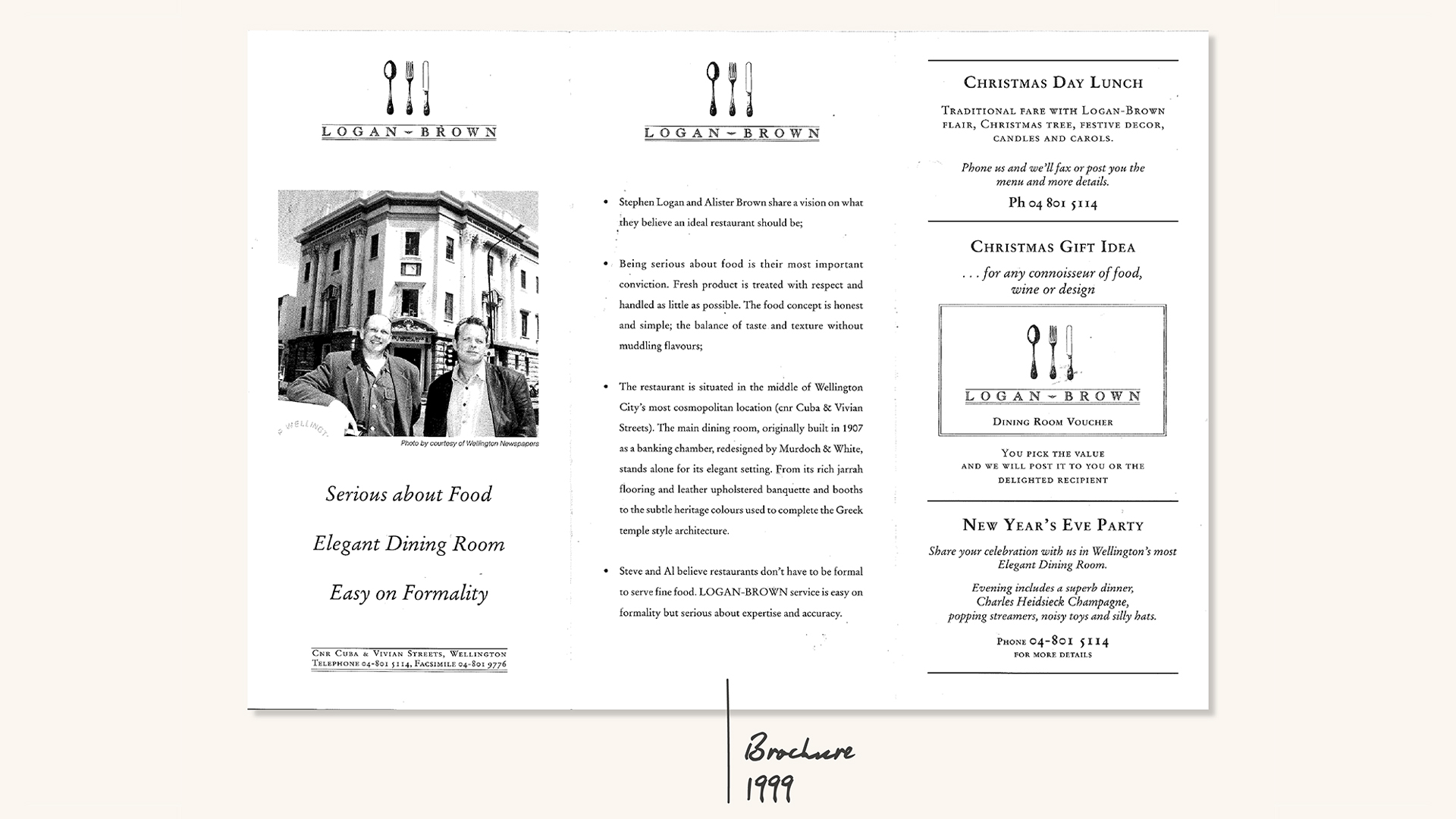
That beginning was an empty banking chamber, a 12-week deadline and a leap of faith from co-founders Steve Logan and Al Brown. Logan Brown opened on December 13, 1996, after a frantic transformation led by designer and builder Trace Murdoch and what Steve describes as a “small but fearless army of tradies.” The days were long, the pace wild and, by modern standards, near impossible.
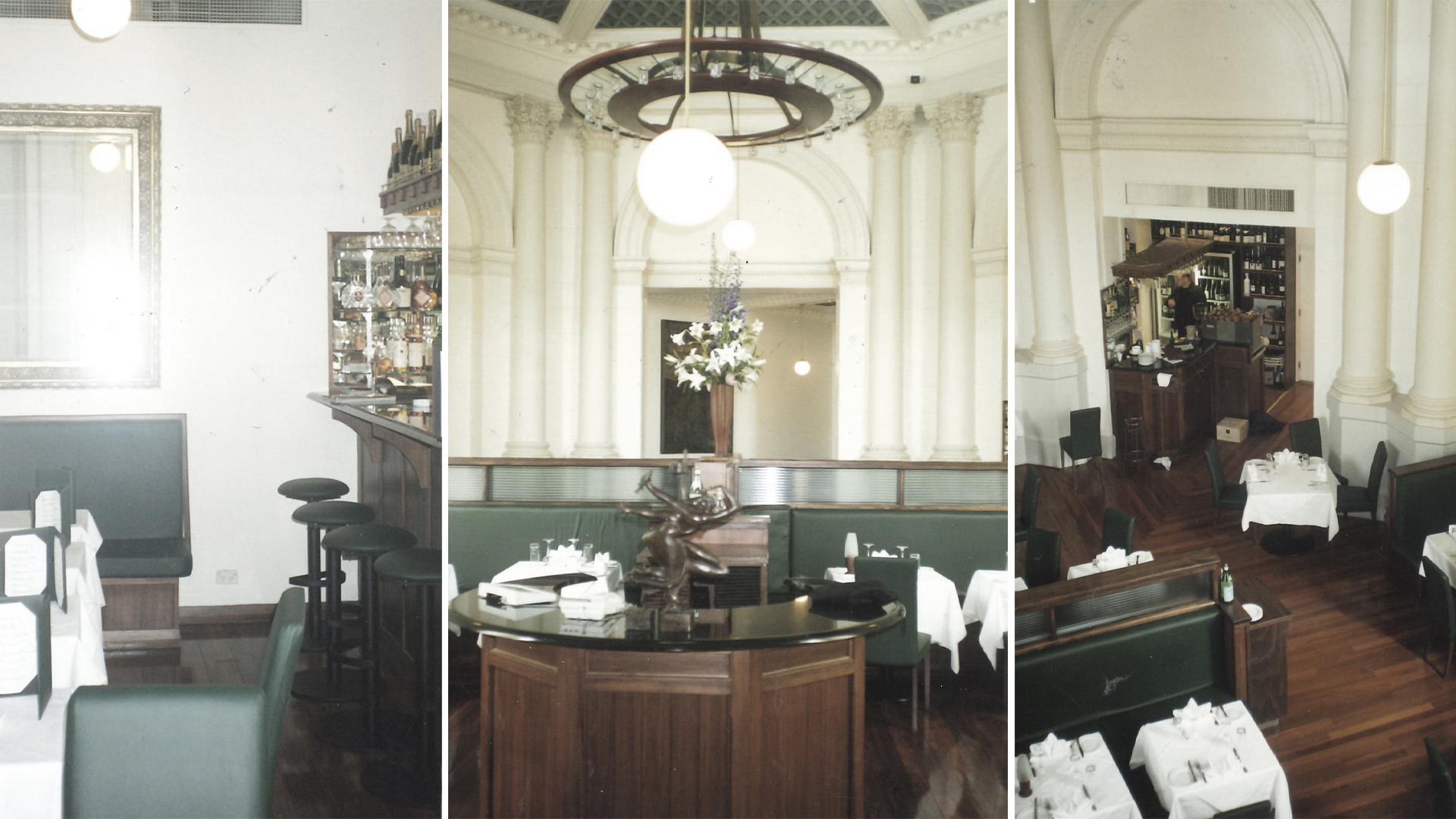
Looking back, Steve sees how Logan Brown has evolved alongside New Zealand dining. “The standard of cuisine in New Zealand has steadily improved since then,” he says. “The sort of food we did back in those days was more bistro. Less ingredients on the plate, a lot more simple.” There was a wild boar pie, steak with béarnaise and food that, in Steve’s words, was “quite humble.” But there were also dishes that established the restaurant’s identity from the beginning, including the pāua ravioli that appeared on the very first menu and remains its signature dish today.
“Thinking back to then, and looking to now, Al and I would think the food was pretty bloody fancy these days,” he says. As the kitchen evolved, so too did the place Logan Brown holds in people’s hearts. More than half a million diners have passed through its doors, many returning for their most important moments.
“It’s really special,” Steve says. “We’re proud to be part of so many people’s lives and it can be multigenerational. We had a couple get engaged here, then they had a baby and brought the kids in for graduation.”
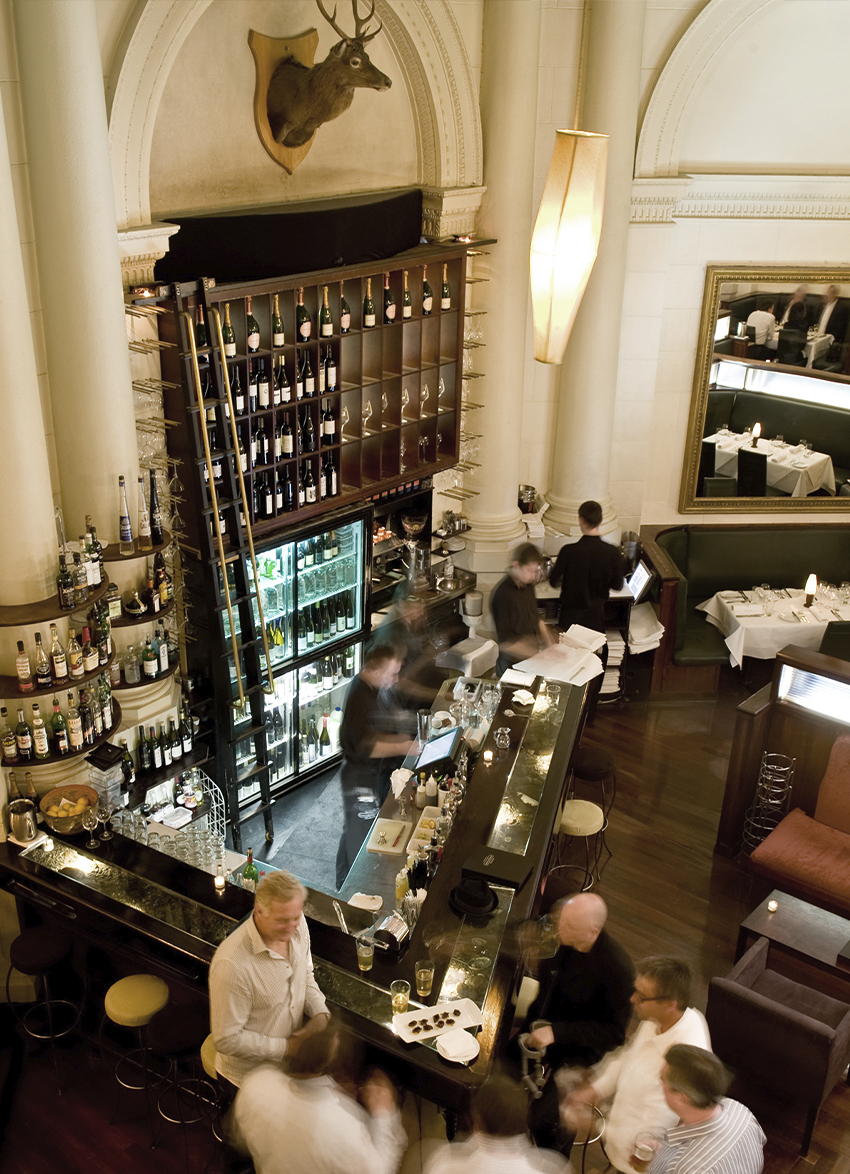
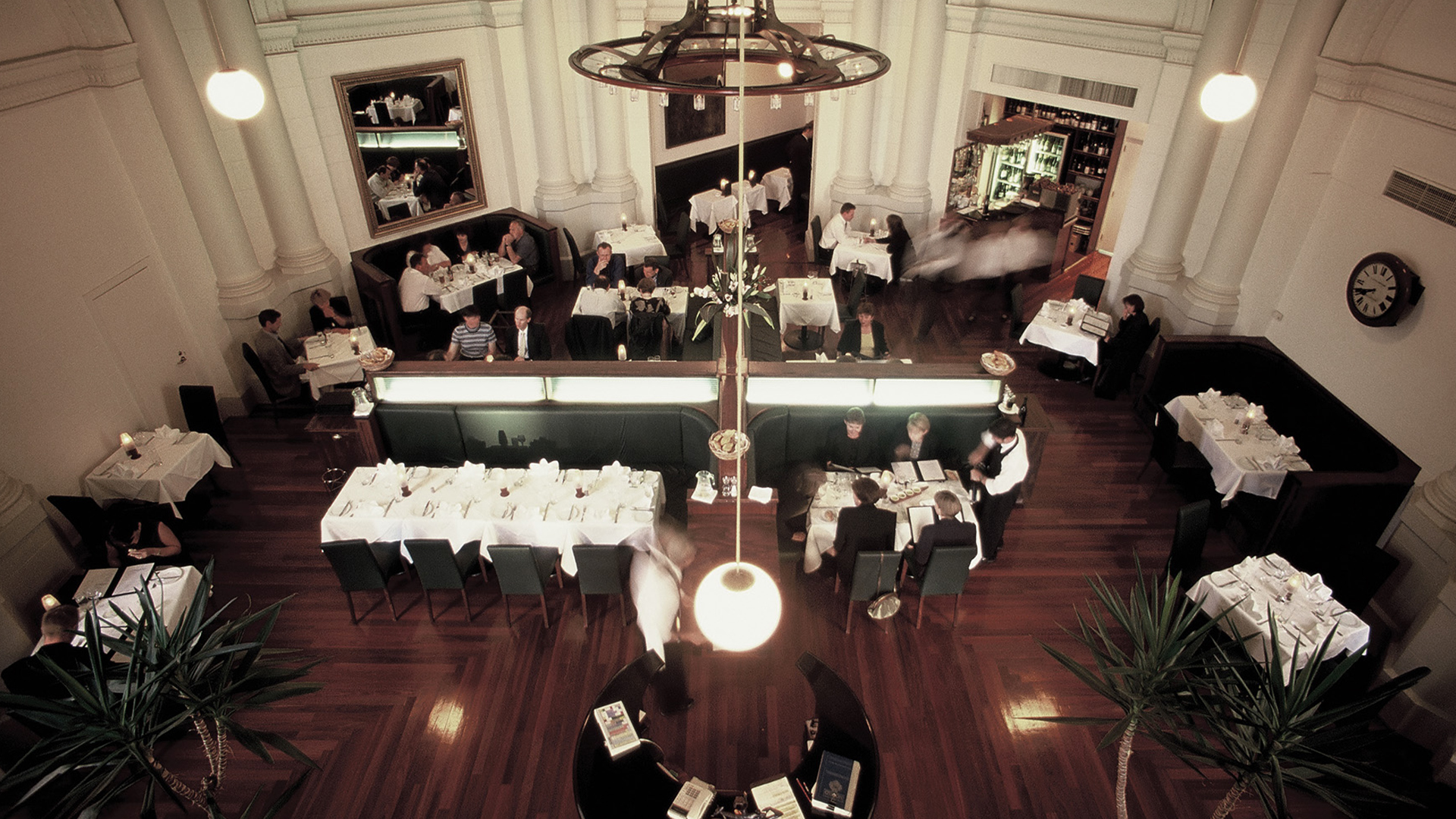
Everything about Logan Brown suggests occasion, from the heritage banking chamber and its dome ceiling to the tablecloths and iconic red doors. Yet at its core, Steve has never wanted the restaurant to feel out of reach. “Al and I are pretty basic Kiwi blokes,” he says. “We love rugby, fishing, barbecuing and partying. Our mums probably wanted to try and tidy us up a bit. We weren’t flashy, but we did want to offer a premium experience for our guests.”
The room may carry grandeur, but the intention has always been simple: diners should feel at home. “When people come through our door, we just want to give them a big kia ora,” Steve says, a big, distinctly Kiwi welcome. “It doesn’t matter what they look like, what shape, colour, religion or who they like to kiss. Just come in, you’re in our place, we’re going to look after you.”
A diner arriving in shorts matters just as much as one dressed to the nines. If the building suggests otherwise, Steve knows it. The space can make people feel they need to be serious or assume the experience will be expensive and formal. “There’s nothing better than a full dining room of people going crazy and having a great time,” he says. “Clinking glasses and laughter, hustle and bustle, quiet is the last thing we want.”
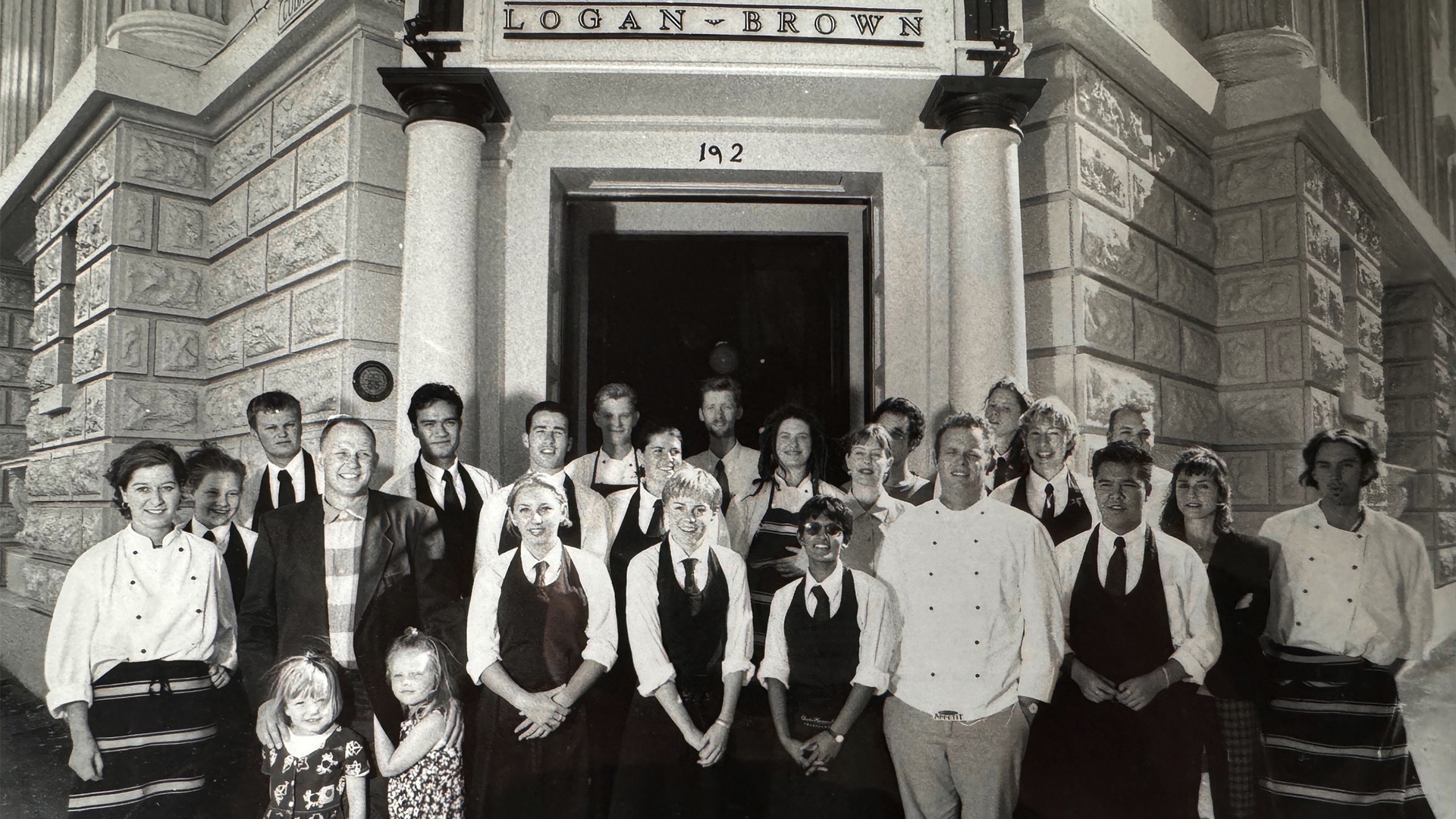
That same ethos extends well beyond the dining room. For Steve, hospitality isn’t reserved for guests, it’s also how the restaurant looks after its own. “People often come to us young and raw,” he says. “It’s not about their skills or knowledge, it’s about their passion and their work ethic.” Over the years, he has watched kids arrive awkward, uncertain, sometimes difficult, then slowly click into place, finding confidence, pride and purpose.
“There’s been a bunch,” Steve says. “We had Ollie, a two-hat chef who is opening his own restaurant in Christchurch at the end of this year. He came to us as a naughty school kid and boy racer, but he had a passion for food and he really wanted to learn.”
Front-of-house staff have also gone on to open restaurants of their own, such as Natasha Parkinson, co-owner of Auckland’s much-loved Alma, while others have left hospitality altogether, moving into law, foreign affairs, teaching, film production and countless other careers. “We feel like parents to a lot of the young people that come through,” he says, laughing. “Or a grandparent, if it’s me probably.”
That culture was clear on MICHELIN night. When executive chef and partner Shaun Clouston had his moment in the spotlight, he swiftly dodged my compliments, using the opportunity instead to talk about the pride he feels in seeing young chefs come through the Logan Brown kitchen and go on to build careers of their own. One example is Maxine Scheckter, who first came to Logan Brown as a 16-year-old. After spending a Saturday helping in the kitchen, she emailed Shaun asking if she could come back and work for free, partly because she loved it and partly because the alternative was working for her dad. She did come back, eventually turning that beginning into a career of her own, including time at the three-MICHELIN-starred Fat Duck in Bray, England, and the release of her own cookbook.
The Logan Brown family is carried by the people who stay, return, fix and keep the restaurant moving. “It’s every single person,” Steve says. “We’ve got our cleaner, Oscar, who’s been with us for something like 24 years. We’ve got Tim Morgan, our part-time kitchen hand, who worked with me at Brer Fox Café in 1988 and now does two half days a week with us.”
Then there are the delivery drivers, suppliers, plumbers, producers, fishermen and farmers, each woven into the wider Logan Brown story. “We have great relationships over many, many years,” he says. “They’re all part of our family and they bend over backwards for us. Shaun’s mates with so many of our producers and suppliers as well, goes fishing with our fishermen and we visit the farmers when we can. It’s a really lovely aspect of what we do.”
If people are the heart of Logan Brown, consistency has kept it beating. That continuity is reflected in the people who have carried the business. After the restaurant opened, Debbie Jones, Logan Brown’s financial controller, “a wonderful, wonderful woman,” became part of the ownership story, alongside Shaun Clouston, whose influence on the kitchen and wider restaurant has helped shape much of what Logan Brown is today.
“In our partnership, everyone’s really passionate, really hard-working, and we’re all a little bit different,” Steve says. “When we come across trouble, we get together, and we sort stuff out, and we get on with it pretty fast. We’re really resilient and we’re pretty experienced now. The world’s still chucking stuff at us, but we get through it together.”
That resilience matters, because for all the romance of a dining room full of clinking glasses and laughter, hospitality is by no means an easy business. Passion helps, but it doesn’t pay the mortgage. “You can’t live off the fumes of your passion,” Steve says. “Those things we talked about, the lovely letters from the customers, seeing the team grow and move on, and these intangibles. But there’s still the bottom line.”
“When something like this MICHELIN recognition happens, it fills our tank again,” he says. “When we still feel like the rest of the world sees us as important to the hospitality industry and to New Zealand, other people see it, and they start coming back in. It’s good for the bottom line and it’s good for the heart.”
The lift hasn’t been felt by Logan Brown alone. At the MICHELIN Awards, one of the moments that stayed with Steve came from Teresa Pert of Ortega Fish Shack, who was too nervous to say much when she took the stage, but managed something simple. “All I can say is, I’m so proud to be part of the Ortega family,” Steve recalls her saying. “And I just thought, that’s bloody beautiful. That’s better than anything else anyone said up there because that’s what it’s all about. It’s the whole team, every single person, it’s a community and it’s family.”
Back on Cuba Street, that sense of shared pride spread quickly.
“Hamish at Midnight Espresso comes up to me and gives me a big hug and says, ‘Oh, thanks so much, Steve,’” he says. “He’s just thankful that we’ve been recognised because it shines a light on Cuba Street as a whole. He’s been our neighbour forever and it means a lot.”
Next door, Mike from El Matador came over to say how proud he was too. Suppliers said the same. Even strangers have stopped Steve for a quintessentially Kiwi pat on the back. “It’s really given everyone a lift in morale, a shot in the arm and a spring in the step of the team.”
For Steve, that wider recognition matters. The neighbourhood has long had its own concentrated dining culture, with a number of excellent restaurants clustered within a few streets of one another. He is quick to hand them their flowers, from Rita, Jano, Ombra and Floriditas to 1154, Highwater, Damascus and so many more.
He hopes the recognition might also slow the familiar flow of hospitality talent overseas. “From a big-picture point of view, more talent could be retained in New Zealand because now they can work in world-recognised places,” Steve says. “I think we won’t lose as many, I hope at least.”
In the end, for all the awards, history and recognition, Steve goes back to basics. “Hospitality’s pretty simple,” he says. “It probably started thousands of years ago, when a caveman had fire, and some stranger came to join, they shared a feed, they looked up at the stars and they were safe.”
For Steve, a restaurant still serves that same purpose. It gathers people around the fire and gives them somewhere to feel part of a community, to be noticed, fed and looked after. “I think in 30 years from now, Logan Brown would still be the same,” he says. “I’m confident that the love you get, the hospitality, that kia ora will be the same. The kai will probably be a bit different, but it will still be a safe place to come and be nourished.”
latest issue:
Issue 128
This winter issue of dish is about comfort and connection. Celebrating the best of New Zealand and Australian produce, it brings together recipes from some of our most-loved chefs, including Moroccan Chicken Soup, Mint-glazed Roasted Leg of Lamb, Slow Cooker Braised Red Wine and Miso White Chocolate Cheesecake. Find plenty to carry you through the colder months, from flaky sausage rolls and mushroom pie, to soul-soothing pasta, nostalgic baking, weekend market inspiration and dinner party menus. There’s a spotlight on the Outstanding Food Producer Awards, recipes from Caroline Griffiths’ Midnight Spaghetti, and a deep dive into the difference between Kiwi syrah and Aussie shiraz.