
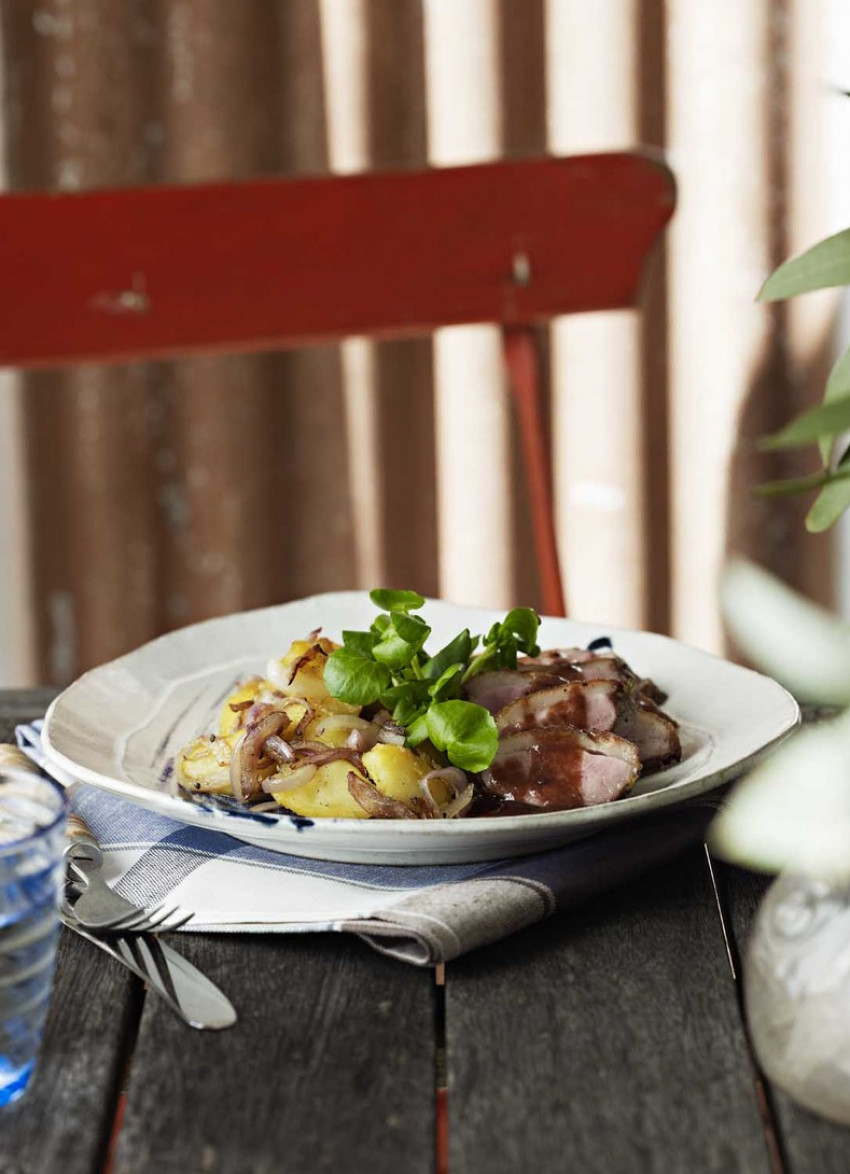

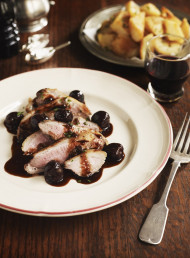
Quince paste is another Barossa favourite, again brought back into vogue by Maggie Beer. It goes so well with rich gamey meats like this duck, but is also a perfect accompaniment to cheese.
Serves: 4
INGREDIENTS
4 single, boneless duck breasts, skin on
2 teaspoons sea salt
6 juniper berries
1 tablespoon finely chopped rosemary
zest of 1 orange
2 cloves garlic, crushed
freshly grated pepper
1 tablespoon olive oil
Potatoes
800 grams floury potatoes, e.g. Agria, peeled
1 red onion, thinly sliced
2 tablespoons chopped flat-leaf parsley
sea salt and freshly ground pepper
To finish
1 cup chicken stock
2 tablespoons quince paste
METHOD
Potatoes: Cut the potatoes into 3cm chunks and cook in boiling salted water until almost tender. Drain well and cool.
Duck: Grind the salt, juniper berries, rosemary, orange zest, garlic and freshly grated pepper in a mortar and pestle or finely chop everything together on a board. Mix in the olive oil.
Score the skin with a sharp knife, but don’t cut into the flesh. Rub the paste onto the flesh side of the duck and leave to marinate for several hours if time permits.
Heat a little olive oil in a sauté pan over a medium heat. Season both sides of the duck breasts with sea salt and cook, skin side down for 6 minutes. Turn the duck over and cook for a further 3-4 minutes. Cooking time will depend on the thickness of the duck breasts. Do not let the pan catch and burn. Transfer to a plate and cover loosely. Pour off the fat into another sauté pan, ready for cooking the potatoes. Do not wash the pan in which the duck was cooked.
Potatoes: Heat the sauté pan with the duck fat. Add the cold, pre-cooked potatoes and the onion, season and cook until the potatoes are crisp and golden, turning occasionally. Toss with the flat-leaf parsley.
To finish: Add the chicken stock to the reserved sauté pan and boil over a high heat for 1 minute, scraping the base of the pan to release any sticky bits. Whisk in the quince paste and simmer to melt. Season.
To serve: Slice the duck thinly on the diagonal. Arrange on plates with the sautéed potatoes. Spoon the sauce over the duck and serve immediately. Garnish with watercress or rocket if desired.
Juniper berries: an astringent blue-black berry from the juniper tree. They are sold dried and used as flavouring for meat and game dishes. Juniper is also an integral ingredient in gin. Available mainly from specialty food stores but may also be found in health food stores.
Quince paste: quince and many other fruits can be cooked for a long time with sugar until they form a thick paste which sets firm on cooling. It can then be sliced and served with cheese or used to flavour sauces for rich meat dishes. Look for quince paste that is a deep, dark red – it will have the best flavour.

Keep up to date with
dish weekly recipes,
food news, and events.
Related Content
![Roast Duck with Grape and Almond Agrodolce]() Recipe
RecipeRoast Duck with Grape and Almond Agrodolce
Article by Claire Aldous![5 Spice Duck with Noodles, Mushrooms and Asian Greens]() Recipe
Recipe5 Spice Duck with Noodles, Mushrooms and Asian Greens
Article by Claire Aldous![Roast Duck, Pumpkin Gratin and Cranberry Mostada]() Recipe
RecipeRoast Duck, Pumpkin Gratin and Cranberry Mostada
Article by Claire Aldous![Duck Breast with Red Wine and Cherry Sauce]() Recipe
RecipeDuck Breast with Red Wine and Cherry Sauce
Article by Claire Aldous
latest issue:
Issue 128
This winter issue of dish is about comfort and connection. Celebrating the best of New Zealand and Australian produce, it brings together recipes from some of our most-loved chefs, including Moroccan Chicken Soup, Mint-glazed Roasted Leg of Lamb, Slow Cooker Braised Red Wine and Miso White Chocolate Cheesecake. Find plenty to carry you through the colder months, from flaky sausage rolls and mushroom pie, to soul-soothing pasta, nostalgic baking, weekend market inspiration and dinner party menus. There’s a spotlight on the Outstanding Food Producer Awards, recipes from Caroline Griffiths’ Midnight Spaghetti, and a deep dive into the difference between Kiwi syrah and Aussie shiraz.