
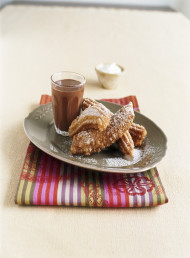
Loukoumades (Greek doughnuts) with Honey Syrup and Walnuts
Photography Josh Griggs.
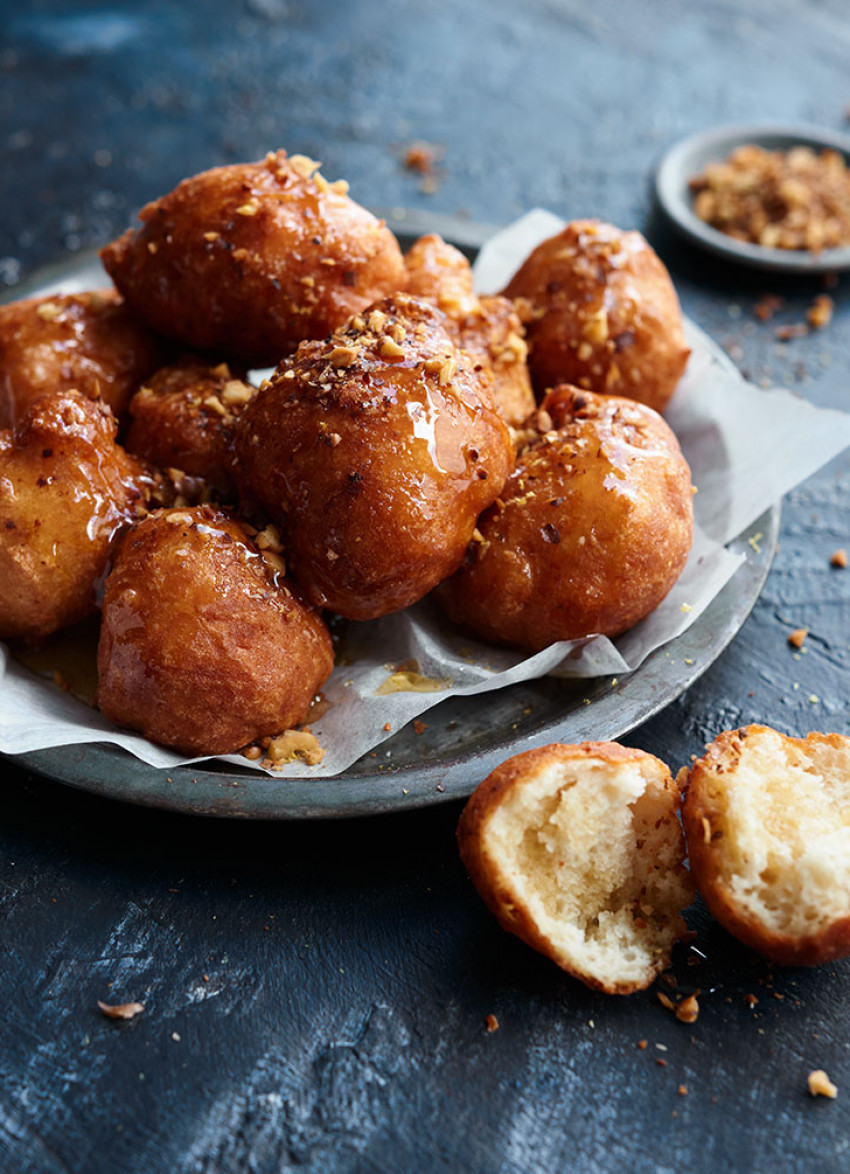

It is believed loukoumades trace back to the first Olympics in 776 BC, where winners were given fried dough covered in honey when presented with their wreaths – these “honey tokens” have so been worth keeping around for the past couple of millennia.
INGREDIENTS
Dough
½ cup water
½ cup milk
8 grams active dried yeast
225 grams flour
2 tablespoons extra virgin olive oil
1 teaspoon sugar
1 teaspoon honey
vegetable oil, for frying
To serve
150 grams honey
½ teaspoon ground cinnamon
100 grams walnuts, finely chopped
1 teaspoon sea salt
METHOD
Add water, milk and yeast to a large bowl and whisk to combine. Add remaining dough ingredients and bring together using a fork to create a smooth batter. Cover batter and rest for
90 minutes to rise.
Heat 5cm of oil in a sauté pan over a medium heat. Dunk a tablespoon into water before taking spoonfuls of batter and dropping them into the hot oil. Cook for 1 minute on each side or until puffed up and golden. Drain on kitchen towels, then transfer to a plate.
To serve: In a small pan, heat the honey until it is a thin, syrupy consistency. Remove from the heat and drizzle over the loukoumades. Sprinkle cinnamon, walnuts and salt over the top and serve. Makes 12–14 doughnuts.

Keep up to date with
dish weekly recipes,
food news, and events.
Related Content

latest issue:
127
In Dream Escape, we journey from Japan and Morocco to Italy, India and beyond, sharing recipes inspired by travel, heritage and comfort. We celebrate the champions of the Outstanding Food Producer Awards, explore the stories and recipes of chefs shaped by their cultural roots, and warm up with everything from West African soups and slow-braised lamb to porchetta, butter chicken and beef noodle soup. Alongside destination menus, Scandinavian sweets and cosy pub classics, Chrisanne Terblanche shares her favourite street-side dining spots in Bangkok, while Yvonne Lorkin explores red wine varietals. This issue, we invite you to slow down, turn the pages and escape through food.