
Moroccan Chicken Soup
Photography Yuki Sato.
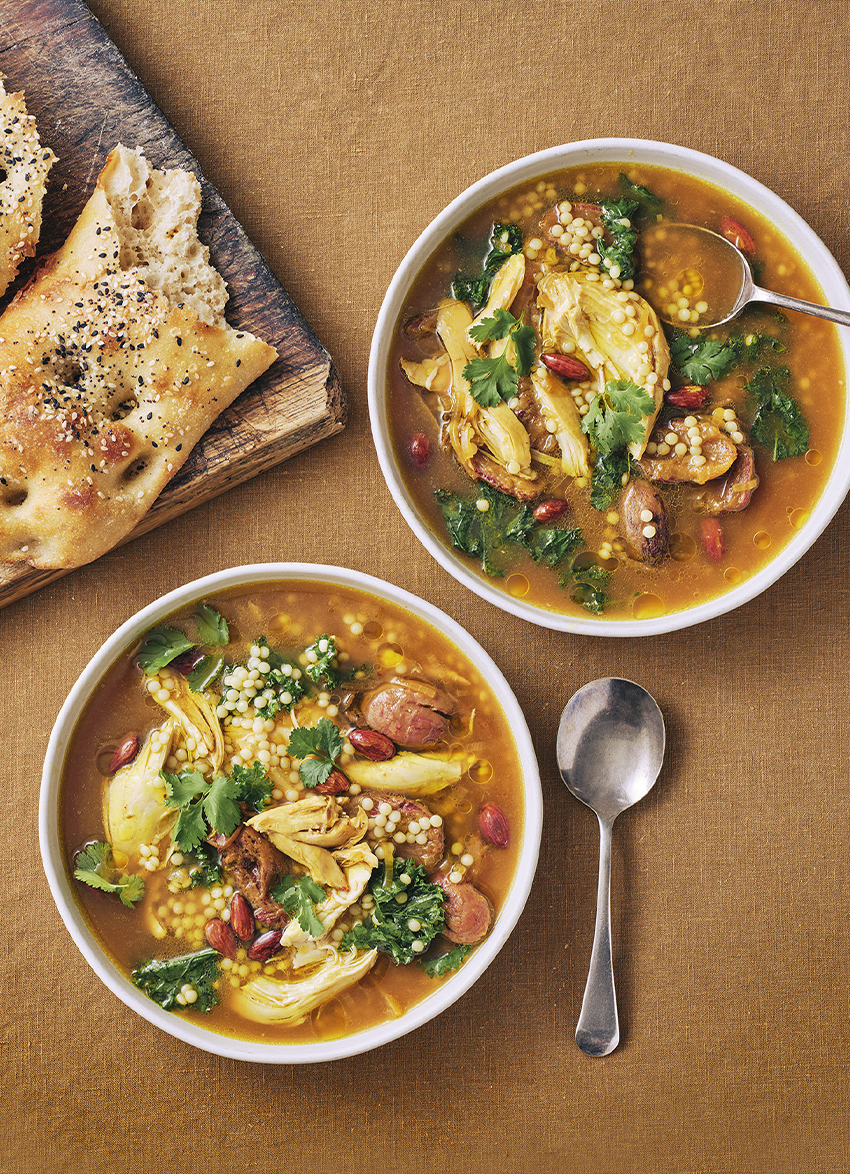
This is my ultimate comfort food. The flavours of the Mediterranean — saffron, preserved lemon, the warm hum of ginger and cinnamon — come shining through, and the whole thing feels like a warm hug.
Serves: 4
INGREDIENTS
1 free-range chicken, about 1.4 kilograms
sea salt and ground pepper
2 teaspoons ground cumin
1 teaspoon ground coriander
350 grams Medjool dates, pitted
1 cinnamon stick
generous pinch saffron threads
1 tablespoon olive oil
1 large onion, thinly sliced
1 teaspoon each ground turmeric and ground ginger
2 litres good-quality chicken stock
100ml extra virgin olive oil
145 grams whole, skin-on almonds
1 preserved lemon, see Cook’s note
1 cup pearl couscous (also called Israeli couscous), cooked
2 cups cavolo nero (strip the stems and slice the leaves before measuring)
2 tablespoons fresh lemon juice
handful fresh coriander or mint leaves
METHOD
Preheat the oven to 180°C regular bake.
Rinse the chicken and pat it dry. Season generously inside and out with salt and pepper, then rub the cumin and ground coriander all over the skin. Leave to marinate for at least an hour at room temperature, longer in the fridge if you’re cooking ahead.
Put the dates in a small pot with the cinnamon stick and saffron. Cover with cold water, bring to a gentle boil, then take off the heat and let it steep. The water will turn the colour of a Moroccan sunset.
In a large, heavy-based ovenproof pot (one with a tight-fitting lid), warm the olive oil and cook the onion with the turmeric and ginger until soft and fragrant, about 5 minutes. Pour in the chicken stock, cover, and simmer gently for 15 minutes.
Heat 60ml of the olive oil in a small frying pan and cook the almonds until golden and toasty. Drain on kitchen towels and season with a pinch of salt. Scrape the white flesh off the skin of the preserved lemon, put into the cavity of the chicken and loosely tie the legs together. Slice the skin into fine strips and set aside.
Lower the chicken into the pot with the onions and stock. Scatter the strips of preserved lemon over the top. Drain the dates (reserving the liquid) and tumble them around the bird. Pour in half the date-soaking liquid along with the remaining 40ml olive oil.
Cover with the lid and cook for 1½ hours. Your kitchen will start to smell like somewhere else entirely.
Take the pot out of the oven and let it rest, lid on, for 15 minutes. The chicken should feel tender enough to slip off the bone with a gentle nudge.
Using a slotted spoon, lift the chicken out of the pot onto a large plate. Pull the meat off in generous, rustic pieces and return it to the broth. Discard the bones, skin and the lemon flesh from the cavity.
Bring the broth back to a gentle simmer. Add the cooked pearl couscous, the kale, the fried almonds, and the lemon juice. Taste, and adjust the seasoning, it should be bright, sweet, savoury, and softly spiced all at once.
Ladle into deep bowls. Scatter with fresh coriander or mint and finish with a generous drizzle of olive oil.
Cook’s notes: You can find jars of preserved lemons at most good supermarkets or Middle Eastern grocers.
Serve with warm flatbread for mopping, and a chilled glass of something crisp and Mediterranean, a dry rosé or a Greek assyrtiko would be our pick at Esther.
Any leftovers are even better the next day; the broth deepens overnight, the dates melt further into the liquid, and lunch sorts itself.

Keep up to date with
dish weekly recipes,
food news, and events.
latest issue:
127
In Dream Escape, we journey from Japan and Morocco to Italy, India and beyond, sharing recipes inspired by travel, heritage and comfort. We celebrate the champions of the Outstanding Food Producer Awards, explore the stories and recipes of chefs shaped by their cultural roots, and warm up with everything from West African soups and slow-braised lamb to porchetta, butter chicken and beef noodle soup. Alongside destination menus, Scandinavian sweets and cosy pub classics, Chrisanne Terblanche shares her favourite street-side dining spots in Bangkok, while Yvonne Lorkin explores red wine varietals. This issue, we invite you to slow down, turn the pages and escape through food.